हृदयाघात (Heart Attack / Acute Myocardial Infarction)
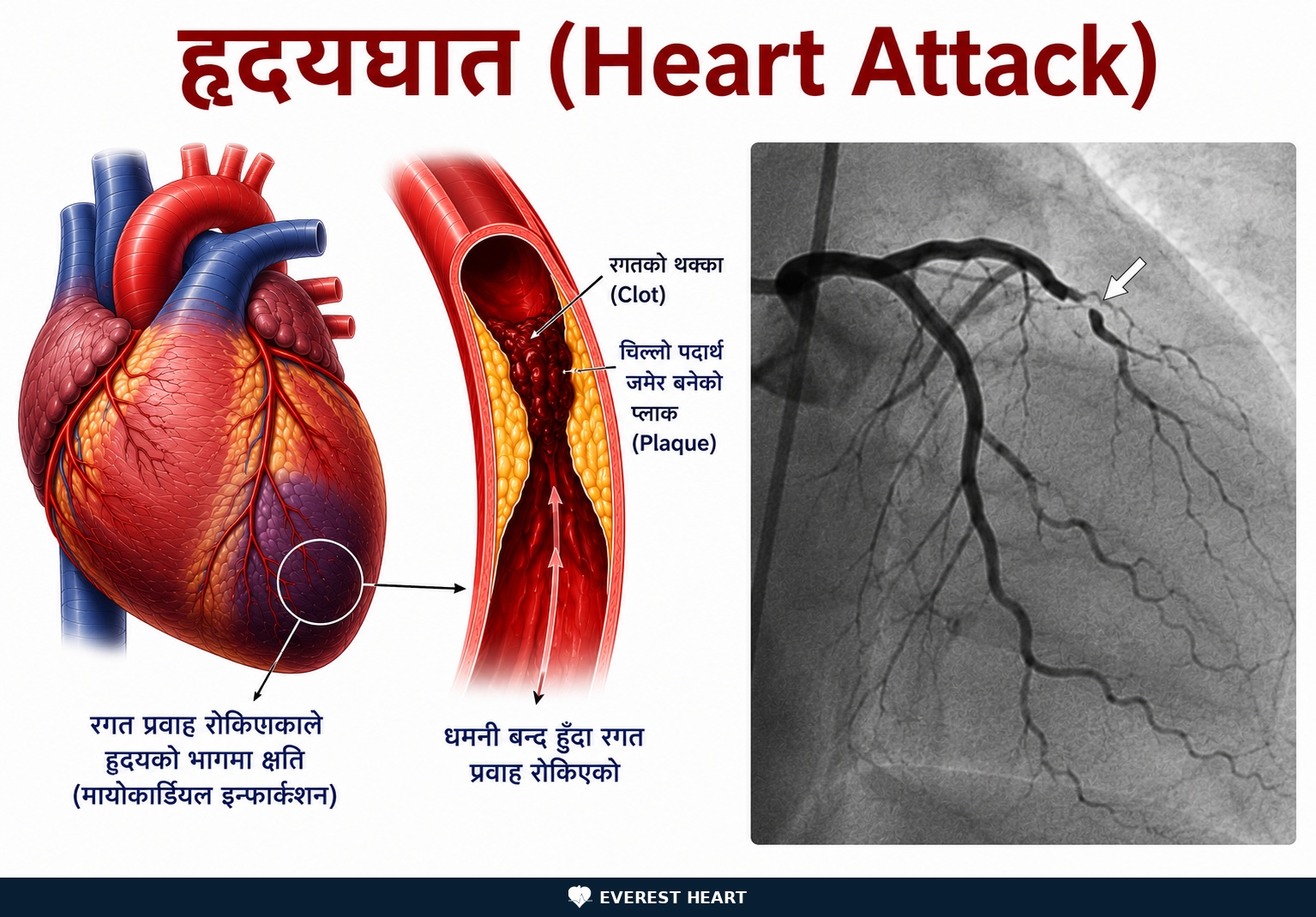
चित्रमा के देखाइएको छ?
माथिको एन्जियोग्राम तस्बिरमा कोरोनरी धमनीको एउटा भाग अचानक बन्द भएको देखाइएको छ। वास्तविक हृदयाघातमा पनि यस्तै एन्जियोग्राफी गरेर धमनीको ठ्याक्कै कुन भाग बन्द भएको हो भनी पत्ता लगाइन्छ, र त्यसपछि स्टेन्ट (PCI) राखेर धमनी फेरि खोलिन्छ।
हृदयाघातको पुष्टि कसरी हुन्छ?
छाती दुखाइ मात्रैले हृदयाघात पुष्टि हुँदैन। पुष्टिका लागि दुई कुरा सँगै चाहिन्छ: रगतमा ट्रोपोनिन नामक तत्व अचानक बढेको वा घटेको हुनुपर्छ (यसले मुटुको मांसपेशीमा क्षति भएको देखाउँछ), र त्योसँगै अरू कुनै न कुनै प्रमाण हुनुपर्छ — जस्तै लक्षण, ECG मा नयाँ परिवर्तन, वा इमेजिङमा मुटुको कुनै भाग राम्ररी नचलेको देखिनु।
दुई मुख्य प्रकार: STEMI र NSTEMI
अस्पतालमा हृदयाघातलाई प्रायः यी दुई समूहमा छुट्याइन्छ, किनभने उपचारको गति फरक हुन्छ:
| प्रकार | के हुन्छ? | उपचारको सामान्य दिशा |
|---|---|---|
| STEMI | धमनी पूर्ण रूपमा बन्द भई ECG मा छुट्टै किसिमको परिवर्तन (ST-elevation) देखिन्छ। | आपतकालीन अवस्था — सकेसम्म चाँडो स्टेन्ट राखेर धमनी खोल्नु (Primary PCI) नै उत्तम उपचार हो। स्टेन्ट तुरुन्तै सम्भव नभएको ठाउँमा क्लट-घोलाउने औषधि (Fibrinolytic) दिएर पछि ठूलो अस्पताल पठाइन्छ। साथसाथै रक्त-पातलो बनाउने औषधि पनि दिइन्छ। |
| NSTEMI | ECG मा STEMI जस्तो स्पष्ट परिवर्तन नदेखिए पनि ट्रोपोनिन बढेको र मुटुमा रगत नपुगेको प्रमाण हुन्छ। | रक्त-पातलो औषधि, कोलेस्ट्रोल घटाउने औषधि र लक्षण नियन्त्रण। जोखिम कति छ भनेर हेरी छिटो वा केही समयपछि एन्जियोग्राफी/स्टेन्ट गरिन्छ। क्लट-घोलाउने औषधि सामान्यतया NSTEMI मा दिइँदैन। |
हृदयाघातका थप ५ प्रकार (Type 1–5)
माथिको STEMI/NSTEMI ले "कस्तो देखिन्छ" भन्ने कुरा जनाउँछ। यसबाहेक हृदयाघात किन भयो भन्ने आधारमा चिकित्सकहरूले अन्तर्राष्ट्रिय मापदण्ड (Universal Definition) अनुसार थप वर्गीकरण गर्छन् — यसले उपचार छनोटमा मद्दत गर्छ:
Type 1 — प्लाक फुटेर हुने
धमनीभित्रको प्लाक आफैं फुटेर वा घस्सिएर त्यहाँ रगतको थक्का बन्दा हुन्छ। STEMI र NSTEMI दुवै यही प्रकारमा पर्न सक्छन्। उपचार: स्टेन्ट, रक्त-पातलो औषधि र कोलेस्ट्रोल घटाउने औषधि।
Type 2 — आपूर्ति र माग नमिल्दा हुने
धमनीमा नयाँ थक्का नबने पनि, शरीरलाई चाहिने र मुटुले पाउने अक्सिजनको मात्रा नमिल्दा हुन्छ — जस्तै गम्भीर रक्तअल्पता, अक्सिजन कम हुनु, रक्तचाप एकदमै घट्नु/बढ्नु, वा धड्कन धेरै छिटो हुनु। यहाँ मुख्य उपचार त्यो मूल कारण सुधार्नु हो; Type 1 मा जस्तो सधैं स्टेन्ट चाहिँदैन।
(Type 3, 4 र 5 दुर्लभ अवस्थामा प्रयोग हुन्छन् — जस्तै अस्पताल बाहिरै मृत्यु भएको वा स्टेन्ट/बाइपासपछि भएको हृदयाघात। यी बारे आफ्नो चिकित्सकसँग विस्तृत जान्न सकिन्छ।)
हृदयाघातमा प्रयोग हुने प्रमुख उपचार
धमनी खोल्ने उपचार
STEMI मा जति चाँडो सकिन्छ स्टेन्ट (Primary PCI) राखेर बन्द धमनी खोल्नु नै मुख्य उपचार हो। केही अवस्थामा क्लट-घोलाउने औषधि वा बाइपास शल्यक्रिया (CABG) आवश्यक पर्न सक्छ।
रक्त-पातलो औषधि (Antiplatelet)
एस्पिरिन र अर्को थप औषधि (P2Y12 Inhibitor जस्तै क्लोपिडोग्रेल) सँगै दिइन्छ। कुन औषधि र कति समयसम्म भन्ने कुरा रगत जम्ने र रक्तस्राव हुने दुवै जोखिम हेरेर तय गरिन्छ।
कोलेस्ट्रोल घटाउने औषधि
उच्च-तीव्रताको कोलेस्ट्रोल घटाउने औषधि (Statin) सामान्यतया तुरुन्तै सुरु गरिन्छ वा जारी राखिन्छ। LDL कोलेस्ट्रोल पर्याप्त नघटे थप औषधि सिफारिस गर्न सकिन्छ।
दीर्घकालीन रोकथाम
उपयुक्त बिरामीमा बिटा ब्लकर, ACE इन्हिबिटर वा ARB जस्ता औषधि थपिन्छन्। यसका साथै धूम्रपान पूर्ण त्याग, रक्तचाप/मधुमेह नियन्त्रण, हृदय पुनर्स्थापना कार्यक्रम (Cardiac Rehabilitation), नियमित शारीरिक गतिविधि र स्वस्थ खानपान दीर्घकालीन हेरचाहको अभिन्न हिस्सा हुन्।
कस्ता लक्षण हुन सक्छन्?
छातीमा दबाब, थिचिएको वा च्यापिएको महसुस, हात/काँध/घाँटी/जबडा/ढाडतिर फैलिने असहजता, सास फेर्न गाह्रो हुनु, चिसो पसिना, वाकवाकी, कमजोरी वा अचानक नराम्रो महसुस हुनु — यी सबै हृदयाघातका संकेत हुन सक्छन्। केही व्यक्तिमा छाती दुखाइ प्रमुख लक्षण नै नहुन सक्छ।
मेरो अर्को कदम
- मेरो निदान (Diagnosis) को सही नाम के हो?
- रोग हल्का, मध्यम वा गम्भीर कुन स्तरमा छ?
- मलाई अर्को कुन परीक्षण चाहिन्छ?
- मेरो औषधि किन दिइएको हो?
- म कति व्यायाम गर्न सक्छु?
- मेरो परिवारका सदस्यले जाँच (Screening) गर्नुपर्छ?
- अर्को फलोअप (Follow-up) कहिले?
अन्तिम पटक चिकित्सकीय समीक्षा: अगस्ट २०२६ · प्रमाण अद्यावधिक: ACC/AHA हालैका दिशानिर्देशसम्म
बिरामीले प्रायः सोध्ने प्रश्नहरू
STEMI र NSTEMI बीच के फरक हो?
दुवै हृदयाघातका प्रकार हुन्। STEMI मा धमनी पूर्ण रूपमा बन्द भई ECG मा विशेष परिवर्तन देखिन्छ र सामान्यतया तुरुन्तै क्याथेटराइजेसन चाहिन्छ। NSTEMI मा धमनी आंशिक रूपमा बन्द हुन्छ; उपचार अझै तत्काल आवश्यक भए पनि प्रायः थोरै समय पाइन्छ।
हृदयाघातपछि पूर्ण रूपमा सामान्य जीवनमा फर्कन सकिन्छ?
धेरैले सक्छन्, विशेष गरी समयमै उपचार पाएमा र हृदय पुनर्स्थापना (cardiac rehab), औषधि पालना र जीवनशैली परिवर्तन गरेमा। मुटुको क्षतिको हद र समग्र स्वास्थ्यले पुनर्स्थापनाको गति र स्तर निर्धारण गर्छ।
हृदयाघातपछि व्यायाम गर्न मिल्छ?
मिल्छ र सामान्यतया सिफारिस नै गरिन्छ — तर आफैं सुरु नगरी हृदय पुनर्स्थापना (cardiac rehab) कार्यक्रम मार्फत सुरक्षित रूपमा क्रमशः बढाउनु उपयुक्त हुन्छ। कहिले र कति सुरु गर्ने भन्ने चिकित्सकसँग छलफल गर्नुहोस्।
हृदयाघातपछि फेरि हुने जोखिम कति हुन्छ?
औषधि पालना नगरे, जोखिम कारक (धूम्रपान, अनियन्त्रित रक्तचाप/कोलेस्ट्रोल) नियन्त्रण नगरे जोखिम बढी रहन्छ। तर सिफारिस गरिएको उपचार र जीवनशैली परिवर्तन पालना गर्दा जोखिम उल्लेख्य घट्छ।
छाती दुख्दा हृदयाघात हो कि होइन कसरी थाहा पाउने?
घरमै निश्चित हुन सकिँदैन — त्यसैले नयाँ, गम्भीर वा अस्पष्ट छाती दुखाइमा ढिलो नगरी तुरुन्त चिकित्सकीय मूल्याङ्कन लिनु सुरक्षित हुन्छ।